
Key takeaways
- Coolest to wear: linen and hemp. Both conduct heat away from the skin and release moisture faster than cotton.
- Warmest for the weight: wool and cashmere, because the crimp of the fibre traps air.
- Hardest-wearing: polyamide, then polyester. Among natural fibres, hemp and linen are the strongest and get stronger wet.
- Easiest to care for: polyester dries fastest and holds its shape. Wool and silk need the most care.
- Most European: flax. Europe’s strength with every other fibre is processing, not growing.
By EU law you can count on two things on a composition label: the legal name of each fibre and its share by weight. Nothing about fibre length, fineness or strength, which decide how the garment will feel and last, has to appear anywhere. In this guide you will find the types of fabric for clothes you will meet in a shop, what each fibre is for, what it needs in wear and care, and which number you need to know to assess its quality. It covers the four families that make up almost all clothing: plant fibres (cotton, linen, hemp), animal fibres (wool in its main forms, silk), regenerated cellulose (viscose, modal, lyocell) and synthetics (polyester, polyamide, elastane, acrylic). Leather, down and the rarer fibres are not in it. Each material gets one section here, and the deeper guides follow one by one.
Why most clothing is polyester now, and why that matters
Most clothing is polyester because polyester is cheap, strong, and can be made in any quantity without waiting for a harvest. Seventy years ago it did not exist in a shop. Today it is about six in every ten kilos of fibre made in the world, by the industry’s own count, and cotton is under two in ten. Wool, flax and silk together add up to less than one in fifty.
Until the 1930s every garment anyone wore came from a plant or an animal: cotton, linen, hemp, wool, silk. The first fibre made in a laboratory was nylon, produced at DuPont in 1935 and sold to the public as stockings on 15.05.1940. Four million pairs went in four days. Nylon was sold as a replacement for silk: silk stockings laddered, cost a great deal, and came from Japan. Then the war took nylon for parachutes and stockings vanished from the shops. Stockings in those years had a seam running up the back of the leg, and bare legs were not done, so women drew the seam line up their calves with a makeup pencil to fake a pair. Real nylons only came back in 1945.
Polyester followed. From 1951 it was sold as Terylene in Britain and Dacron in America with a two-word promise: wash and wear. No shrinking, no ironing, dry by morning. For a household without a washing machine that was a real change, and the shirts and suits of the 1950s and 1960s were sold on it.
Once the novelty had worn off, polyester stayed for two reasons: price and supply. It is made from oil in a factory, so its cost does not depend on rain, pests or a harvest, and a mill can order as much as it wants in any month of the year. Cotton, wool and flax come from a field or a flock, and one bad season makes them scarce and dear. When its reputation collapsed in the 1970s (the leisure suit did that), fibre makers hid the word behind brand names and kept making it. In the 1980s fleece and sportswear made it respectable again, and in 2002 it overtook cotton in global sales. Fast fashion, which arrived in the same years, is built on that fibre: a cheap material plus cheap sewing is what makes a new collection every fortnight possible. In two generations most of us went from a few garments made to last, often to measure, to a wardrobe of things bought in large quantities.
Six parts in ten is polyester
Share of all fibre produced in 2024, by weight. Includes industrial textiles, so not a picture of one wardrobe.
Source Textile Exchange, Materials Market Report 2025 (data year 2024), the industry’s own accounting. The link is in the Sources section at the end of the article.
Why it matters is the question underneath this guide. Polyester does some jobs well, and I will say so in its section. But the fibres that dressed people for a few thousand years are still grown, still spun, and in several cases still processed in Europe, and most of them do the everyday jobs of a wardrobe better: they breathe, they take moisture, they age, and at the end they rot. Knowing what each one is for is how you build a wardrobe that lasts and that you love.
How a fibre becomes your garment
The four families start in four different places. Plant fibres are harvested: cotton is picked as a fluff around a seed and ginned from it, flax and hemp are pulled up as stems, retted in the field for several weeks so the pectin rots away, then scutched to free the fibre. Animal fibres are taken from a living creature: fleece is shorn and scoured clean of grease, silk is unwound from a cocoon in hot water. Regenerated fibres begin as wood, dissolved into a cellulose solution and pushed through a spinneret. Synthetics begin as oil, melted into a polymer and pushed through the same kind of nozzle.
What they share is the second half. Every one of them becomes yarn, then fabric (woven or knitted), then a finished cloth (bleached, dyed, printed, softened, coated), and only at the end a garment that is cut and sewn.
Four starting points, one finish
Where each fibre family begins, and the steps every one of them shares.
Sources textil trainer (Chemnitz University of Technology) · Alliance for European Flax-Linen & Hemp · FAO silk reeling manual · Union Customs Code, Art. 60(2). The links are in the Sources section at the end of the article.
Two facts about that second half shape the rest of this guide. First, silk is the only natural fibre that arrives as a continuous filament. Every other natural fibre is a short staple that has to be spun, and how it is spun decides more about the cloth than the fibre’s name does. Wool is the clearest case. Before any fibre can be spun it has to be brushed straight. If it is only brushed roughly, the short and the long fibres stay together and lie in every direction, with air trapped between them. Spun like that, the yarn comes out fluffy, soft and warm, and the cloth made from it is thick and a little hairy: tweed, flannel, chunky knits. This is called woollen yarn, and the roughness is why it pills and wears through sooner. If the fibre is brushed a second time with fine combs, the short fibres fall out and the long ones are laid parallel and tight. Spun like that, the yarn is thin, smooth and strong, and the cloth is dense, cool and slightly shiny, the cloth of a good suit. This is called worsted yarn. It comes from the same sheep, but results in two different fabrics. The difference comes from how the wool is treated before spun into yarn.
Second, when you read “Made in” on the label, you are reading the country of the last substantial step, the cutting and sewing. Where the fibre grew, where it was spun and where the cloth was woven are not on it. A linen shirt sewn in Portugal can be made of flax grown in Normandy and spun on another continent, and the label is truthful. That is why I created the brand profiles in the brand directory, so you can easily find the extra information a brand shares beyond the label.
The materials
Fibre content is where the information starts. Two shirts can both read “100% cotton” and be different garments, because the length of the fibre, the twist of the yarn, the weave and the finishing decide most of how cloth behaves. So each section below names the material, what it is for, what it needs in care, and the one number from which you can read the most about quality. Brands that share those numbers do it in the product description or on a materials page on their own site, and that is where to look. One number brands do give readily is GSM, the weight of the fabric in grams per square metre. It is a weight, do not confuse it with a grade: a heavy cloth can be made from poor fibre, and a fine one from the best.
Cotton
Cotton is the fluff around the seed of the cotton plant, a staple fibre a few centimetres long. It is the everyday fibre for a reason: it takes up moisture, washes hot, and is stronger wet than dry, so it survives the washing machine easily. Its weak points are creasing, slow drying and shrinkage. Cotton has little stretch, which is why a shirt holds a crease, and untreated jersey shrinks a few per cent in its first washes unless the maker pre-shrank it.
The one number is staple length. The longer the fibre the smoother, stronger and finer the yarn it can be spun into. Look for it in the product description or on a brand’s materials page, where it usually appears as a variety name (Pima, Supima, Egyptian, Sea Island) rather than in millimetres, and sometimes as “long-staple” or “extra-long staple”. Two more words in a product description that mean something: “combed cotton”, where the shortest fibres are combed out before spinning for a smoother, stronger, less hairy yarn, and “ring-spun”, the slower spinning route that gives a finer, stronger thread.
From boll to staple
Cotton is the fibre around the seed of the plant. Quality starts with staple length: how long each fibre is.

From field to yarn
the open bolls harvested, by machine on almost every European field
the fibre pulled off the seed
the fibres opened and aligned
combing takes out 5 to 25% of the shortest fibres: smoother, stronger yarn
ring-spun for finer, stronger thread, rotor-spun for cheaper, coarser
The extra-long staple names
Sources ITC Cotton Guide · CottonWorks · USDA classing · Supima · Cotton Egypt Association · WISICA. Photo: Rosaland Cammack / Unsplash. The links are in the Sources section at the end of the article.
What to look for to get an indication of quality:
- A variety or staple name in the description (Pima, Supima, Giza, Sea Island, “long-staple”): the length behind the softness.
- “Combed” and “ring-spun”: short fibres removed, slower spinning, less fuzz and pilling.
- “Pre-shrunk” or “sanforised”. Without it, expect a few per cent shrinkage in the first hot washes.
- Rub one spot fifteen times: if fibres lift straight away, it will fuzz and pill early.
There are several cottons behind that one word, from short upland fibre to Sea Island, and I have written about the differences between them and what “100% cotton” covers in Your cotton is not cotton. The deep dive article on how cotton is grown, ginned and spun is coming.
Linen
Linen is spun from flax, a bast fibre pulled from the stem of a plant that grows in about a hundred days. It is the summer fibre: it conducts heat away from the skin, absorbs about a third of its weight in moisture and releases it quickly, it is stronger wet than dry, and it does not pill. It creases. Flax stretches less than any other fibre here, so every fold stays. That is a property of the fibre, not a fault in the shirt.
The variable that decides how a linen feels and lasts is the quality of the retting, the weeks the stems spend in the field while the pectin rots away. It has no consumer-facing number, so a brand that lists its mill or its fibre certification is the next best thing. Clothing brands more often give the weight, as “medium weight, 185 gsm” or similar.
Inside the stem
Linen is the fibre from the stem of the flax plant. Quality is decided in the field, long before the yarn.

From field to yarn
a 100-day plant, one year in seven on the same field
roots and all, to keep the fibre full length
several weeks lying in the field, July to September
the woody core beaten out, long fibre from short
at 60 °C for fine yarn, dry-spun for coarse
The marks, and what each one covers
Sources Alliance for European Flax-Linen & Hemp (flax growing, certifications) · Irish Linen Guild · textil trainer (Linen) · Goudenhooft et al., 2019. Photo: Jean Weber / INRAE, CC BY 2.0, via Wikimedia Commons. The links are in the Sources section at the end of the article.
Europe is the world’s flax field. About three-quarters of the long flax fibre grown anywhere comes from France, Belgium and the Netherlands, by the count of the Alliance for European Flax-Linen & Hemp. Most of it leaves to be spun elsewhere. “European flax” is a statement about the fibre, not about where the cloth was made. The legal name is “flax” or “linen”, and either is lawful.
What to look for as an indication of quality:
- “European flax” or Masters of FLAX FIBRE for the fibre, Masters of Linen when the whole chain is European.
- “Wet-spun” for fine, smooth yarn. Dry-spun linen is coarser and cheaper.
- Creases are caused by the fibre itself, because flax hardly stretches, so no linen is crease-free. A “non-iron” linen has a resin finish or a blend, so read the composition.
- Hold it to the light: slubs are normal in linen, thin patches are not.
The linen deep dive article is coming.
Hemp
Hemp is the other bast fibre, from the stem of Cannabis sativa, and it behaves like a coarser, stronger linen: cool, absorbent, and among the strongest plant fibres both dry and wet. Its weak point is handle. Raw hemp fibre is coarse and has almost no stretch, which is where “hemp is rough” comes from. It can be wet-spun into fine yarn, or “cottonised”, stripped of lignin and pectin and cut to cotton length, then blended with cotton. The scratchy hemp and the soft hemp are the same plant at different stages of processing.
There is no quality number for hemp yet, so read the product description for what it does offer: the weight, the blend percentage, and whether the fibre was wet-spun or cottonised.
The stronger cousin of flax
Hemp is the other stem fibre. It sits in the stem the way flax does and comes out the same way. What differs is the fibre itself, and the extra route to softness.

From field to yarn
from certified seed with under 0,3% THC
and laid in the field
in the field, as flax is, until the pectin gives way
the woody hurd beaten out, long fibre from short
wet-spun at 60 to 70 °C for fine 100% hemp, or cottonised and blended at around 30% with cotton
Hemp in Europe
of fibre hemp in the EU alone in 2022, up from 20.540 in 2015, over half of it in France (Commission)
by the count of the Alliance for European Flax-Linen & Hemp
and no grading scale for textile hemp yet. The legal name is “true hemp”.
Sources European Commission (hemp) · Alliance for European Flax-Linen & Hemp (European textile hemp) · textil trainer (Hemp) · Kirk et al., Cellulose, 2023 · University of Vermont Extension, 2021 · Goudenhooft et al., 2019. Photo: Barbetorte, CC BY-SA 3.0, via Wikimedia Commons. The links are in the Sources section at the end of the article.
Europe is growing more of it, France well over half of that, and the Alliance for European Flax-Linen & Hemp counts Europe as the second producer after China. Any of it must come from certified seed with almost no tetrahydrocannabinol (THC), the compound that makes the drug varieties of the same plant intoxicating. No hemp mark exists. The legal name is “true hemp”, not “hemp”.
What to look for as an indication of quality:
- “Wet-spun” or “cottonised” in the description: that is the softness route, and untreated hemp is coarse.
- The blend share: cottonised hemp usually arrives at around 30 per cent with cotton, 100 per cent hemp for the hard-wearing pieces.
- The weight in GSM, as for linen.
The hemp deep dive article is coming.
Wool
Wool in EU law is the fleece of a sheep. Cashmere, alpaca, mohair and the other animal hairs have their own names and may carry the word “wool” after them. All of them share one structure: a crimped, scaled protein fibre that traps air, which is why the family is warm. Wool is best for warmth with moisture. It absorbs about a third of its weight in vapour before it feels wet, the crimp gives it stretch and crease recovery, it resists odour, and it does not melt.
Its weak points are felting and moths. Felting happens when heat meets agitation: too hot a wash and too fast a spin, and the scales on the fibre lock into each other and the jumper shrinks. That does not put the machine off limits. I wash my wool on the wool cycle, which is what Woolmark recommends too: gentle action, 30 °C or cooler, a slow spin. “Superwash” wool has been treated with chlorine and a resin so the scales cannot lock. And wool needs washing less often to begin with: it resists odour and stains, by Woolmark’s and the International Wool Textile Organisation’s (IWTO) own account, so airing a jumper between wears usually does the job.
The one number is micron, the diameter of the fibre. Prickle is a diameter effect: fibre ends coarser than about 30 micrometres poke the skin, and about 5 per cent of them in a fabric is enough to make it itch. “Wool allergy” is a myth in the medical literature. The reaction is mechanical. The micron belongs in the product description. A figure such as “18 micron” on a base layer is a measurement. “Soft merino” is an adjective.
Merino is a sheep breed. Its fibre runs roughly 15 to 24 micrometres, and Woolmark, by its own line, puts next-to-skin merino below about 19,5. Cashmere is the undercoat of a goat, combed out in spring. Most of the world’s supply comes from China and Mongolia, and the European step is spinning and knitting: Italian spinners, the Scottish Borders. Sheep’s wool covers everything else: lambswool, Shetland, tweed, none of which is a legal fibre name. Here the story is breed wool, the bodies that stand behind it, and the mills that finish it. The legal name is “wool”. “Virgin wool” or “fleece wool” is allowed only for wool never used in a product before.
The micron scale
Wool is the fleece of a sheep, a crimped, scaled protein fibre. Its number is the diameter: the finer, the softer, and the closer it can sit to the skin.
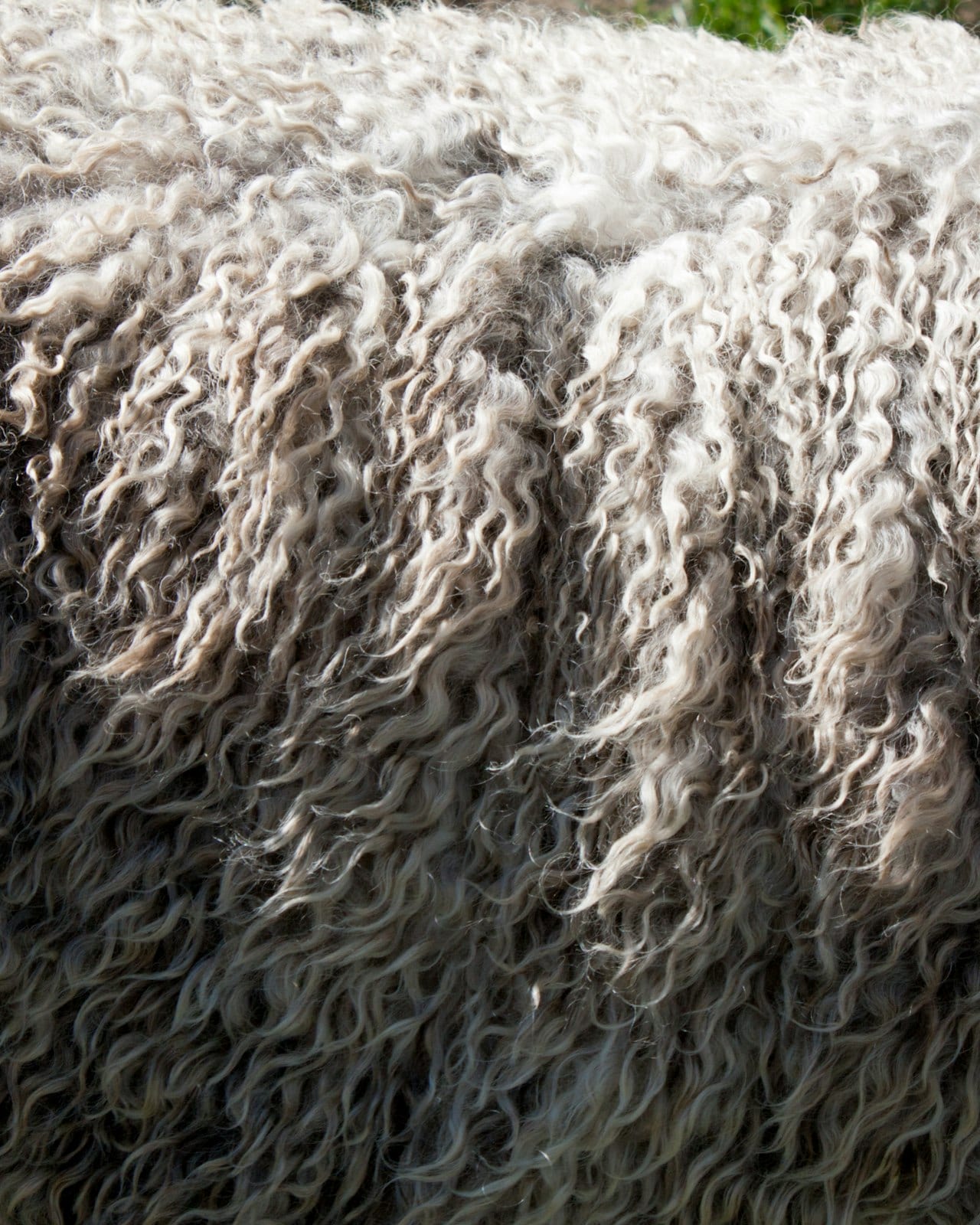
From fleece to yarn
the fleece comes off in one piece, roughly 2 to 4,5 kg depending on breed
washed at 70 to 80 °C to take out grease and dirt, 12 to 47% of the raw weight
the fibres teased apart and aligned
combing removes the short fibres: worsted. Carded only: woollen
worsted yarn for smooth suiting, woollen yarn for tweed and chunky knits
The marks, and what each one covers
Sources Naylor et al., Fabric-Evoked Prickle, 1992 · The Woolmark Company · IWTO · British Wool · Harris Tweed Act 1993 · Native Shetland Wool PDO specification · textil trainer (Sheep Wool, Wool Spinning). Photo: Vince Veras / Unsplash. The links are in the Sources section at the end of the article.
What to look for as an indication of quality:
- The micron for anything next to the skin. Below about 19,5 is Woolmark’s line for merino base layers.
- “Worsted” for smooth, hard-wearing cloth, “woollen” for soft tweeds and knits, “fully fashioned” for knits shaped on the machine rather than cut from a roll.
- “Virgin wool” means never used before. Plain “wool” may be recycled, which is a different product.
- “Superwash” means machine-washable through a chlorine-and-resin treatment.
- The marks: Woolmark certifies content and quality. British Wool, the Harris Tweed Orb and Native Shetland Wool certify origin or process.
Four deep dive articles are coming: the wool family, merino, cashmere, and sheep’s wool.
Silk
Silk is the thread a silkworm spins around itself, unwound from the cocoon in hot water, several of them reeled together into one thread. It is the only natural fibre that arrives as a continuous filament, which is why it can be woven so fine and why it shines. The pupa inside is killed by steam or hot air before it can break out. There is also silk where the moth is allowed to leave the cocoon first, sold as peace silk: the broken filament is spun like a staple fibre, which costs most of the thread and some of the shine.
It is best for drape and for strength at very low weight. Silk is stronger than wool or cotton for its mass, stretches and recovers, and absorbs a good share of its weight in moisture before it feels damp, so it is cool in summer and warm under a jacket. Silk needs a bit more care. Strong sunlight may yellow or weaken it over the years, sweat, deodorant and detergent residue can do the same if they are left in the cloth, and it rubs through sooner than cotton. Wash it at 30 °C with a detergent made for it or even gentler, hand wash your most precious pieces.
The one number is momme, the weight of the silk. You will see it on bedding and pyjama listings (19 to 25 momme is the usual range there, 22 the norm) and on fabric sellers’ pages. Clothing brands rarely give it, so look for the weave name and the weight instead.
One cocoon
Silk is the thread a caterpillar spins around itself. It is the only natural fibre that arrives as a continuous filament, which is why it can be woven so fine and why it shines.

From worm to yarn
the mulberry silkworm, Bombyx mori, fed on mulberry leaves
the caterpillar wraps itself in one continuous thread of fibroin, glued with sericin
the pupa is killed by steam or hot air before it can break out. For peace silk, it is left to emerge
cocoons softened in hot water, the filaments unwound and combined. 6 to 8 kg of cocoons per kg of raw silk
the raw thread twisted, then woven or knitted, degummed and finished
Silk in Europe
China 53% and India 41% of raw silk in 2023. Bulgaria 7 tonnes, Romania 1 (International Sericultural Commission)
about 70 to 80% of European silk woven, printed and finished there, in about 1.400 companies, by the district’s own count
“silk”, and no other fibre may use the word, even for its filament form. Satin and “silky” are weaves and adjectives.
Sources FAO, Silk reeling and testing manual · International Sericultural Commission · UNESCO Creative Cities (Como) · Regulation (EU) No 1007/2011 · textil trainer (Silk). Photo: Stéphanie Thimonier-Vial, CC BY-SA 4.0, via Wikimedia Commons. The links are in the Sources section at the end of the article.
Europe no longer rears the worm. What Europe kept is the transformation: Como weaves, prints and finishes most of European silk by the district’s own count, and Lyon still has a few dozen silk firms around the Jacquard loom it invented. The legal name is “silk”, and no other fibre may use the word, even for its filament form.
What to look for as an indication of quality:
- Momme on bedding and pyjamas (19 to 25 is the usual band). On garments, the weave name and the weight.
- Habotai is the light lining weight, charmeuse the heavy satin with drape.
- “Satin” and “silky” are not silk: only on the composition line can you be sure, and “silk” may not be used for any other fibre.
- Peace silk if the moth matters to you. The trade is shorter fibre and a little less sheen.
The silk deep dive article is coming.
Regenerated fibres: viscose, modal, lyocell, cupro
These are plant-based but factory-made. Wood or cotton-linter cellulose is dissolved and pushed through a spinneret into a new fibre, and each legal name is the name of a process: viscose, modal (a stronger variant of the viscose process), lyocell (an organic solvent that is recovered and reused, and TENCEL is Lenzing’s trade mark for it), cupro (from cotton linters), acetate. There is no fibre called “bamboo” in EU law. Bamboo pulp spun this way is viscose and must be called viscose.
They are best for drape and softness with absorbency. Lyocell is the strong one of the family and keeps most of its strength wet. Viscose is the weakest of the family and needs the most care. It is much weaker than cotton and weaker again when wet, it swells, shrinks and can distort in the machine, and it dries slowly, which is why so much of it carries a dry-clean flag. Lyocell washes well but can fibrillate, a peach-skin surface that pills under wet rubbing. Acetate dislikes heat and dissolves in nail-varnish remover.
There is no quality number a shopper can use. What you can read is the legal name and the trade mark beside it, which EU law allows only next to the legal name, never instead of it.
From wood to fibre
Regenerated fibres are plant-based but factory-made: wood pulp dissolved and spun into a new fibre. Each legal name is the name of a process.
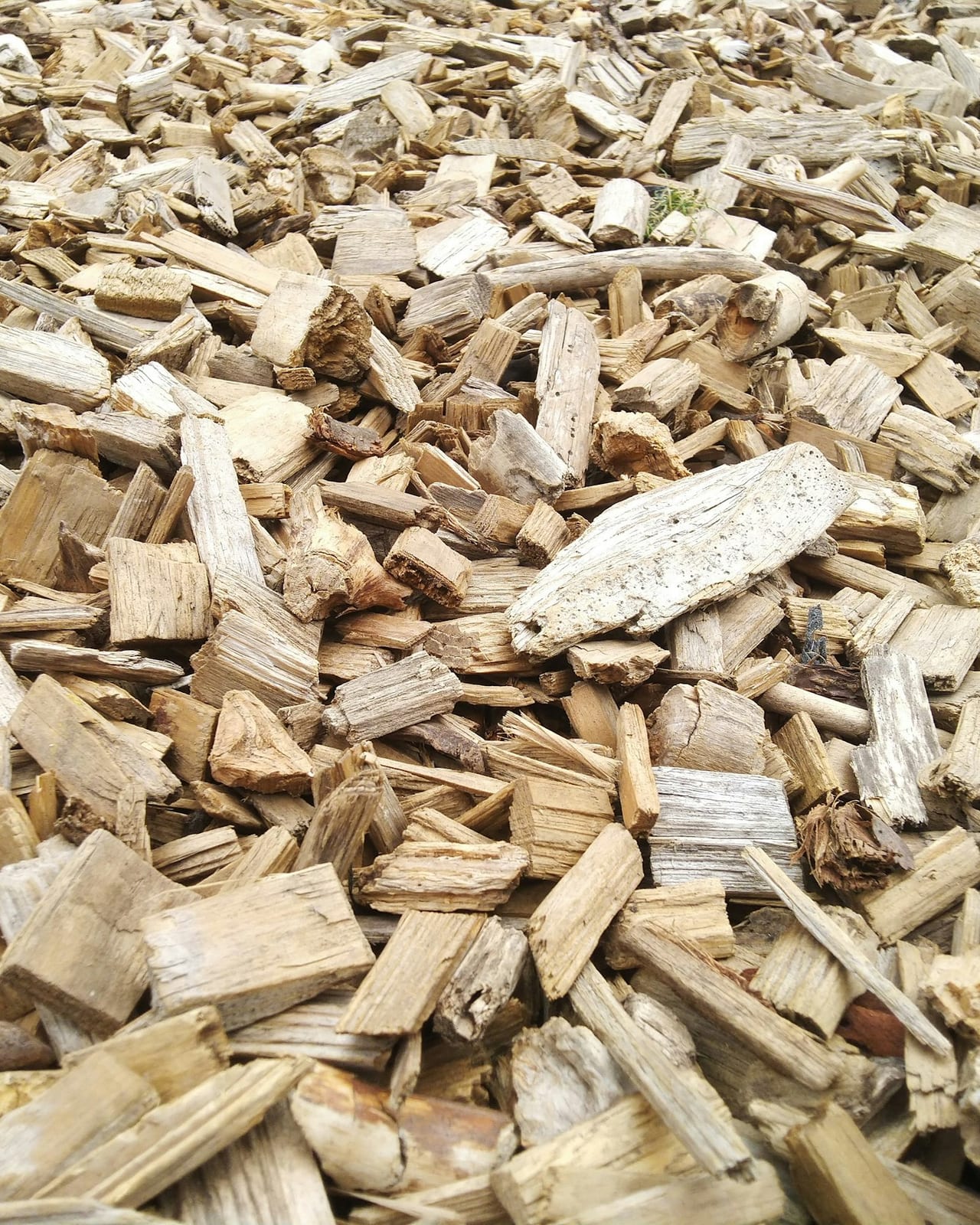
From tree to yarn
beech and other hardwoods, at Lenzing mostly thinnings from Central European forests, more than 99% certified or controlled, by the producer’s own figures
the cellulose extracted from the wood: 320.000 tonnes a year at Lenzing alone
viscose and modal in one chemistry, lyocell in an organic solvent the plant recovers at more than 99%, the producer’s figure
into a continuous filament, or cut to staple
staple yarn, or used as filament for drape
Regenerated fibres in Europe, in 2026
the only site in the world making all three generations: 284.000 tonnes of viscose and modal and 74.000 of lyocell a year, by its own account
Lenzing announced on 27.07.2026 the end of lyocell at Heiligenkreuz by the end of 2026 and Grimsby by the end of 2027. Kelheim Fibres in Bavaria stopped making viscose on 31.03.2026
Canopy, a Canadian NGO, rated 54% of world capacity green in 2025 for forest sourcing. It does not rate water, chemicals or labour
Sources CIRFS · Lenzing AG (locations, technologies) · Ecotextile News, 27.07.2026 · Kelheim Fibres · Canopy, Hot Button 2025 · textil trainer (Viscose, Modal and Lyocell) · Regulation (EU) No 1007/2011. Photo: Slava Kompaniets / Unsplash. The links are in the Sources section at the end of the article.
Europe’s part here is a producer, and it is shrinking. Lenzing in Austria runs the only site in the world making all three generations, but it has announced the closure of two of its European lyocell plants, and Kelheim Fibres in Bavaria stopped making viscose in 2026. The legal names are viscose, modal, lyocell, cupro and acetate.
What to look for as an indication of quality:
- The legal name with the trade mark beside it: lyocell (TENCEL) is the strong, washable one, modal next, viscose the weakest wet.
- “Bamboo” as a fibre name is not lawful, because the fibre is viscose.
The regenerated-fibre deep dive article is coming.
Synthetics: polyester, polyamide, elastane, acrylic
Synthetics are spun from oil, or from recycled plastic. The legal names are polyester, polyamide (nylon is the same fibre and either word is allowed), elastane, acrylic and polypropylene. Lycra, ECONYL and Trevira are trade marks. They are best for strength and shape. Polyester and polyamide are stronger than any natural fibre except silk, they barely absorb water, so they dry fast, and they can be heat-set into a pleat or a shape that survives washing. Polyamide is the most abrasion-resistant of all, which is why it is in socks, tights and shells. Elastane stretches to several times its length and comes back, and a few per cent of it is what keeps a waistband a waistband.
Their weak points are different from the natural fibres’. Polyester holds on to sweat compounds and feeds the bacteria that make them smell, so a polyester shirt smells sooner and keeps smelling after a wash. Polyester melts under an iron on its hottest setting. Cheap acrylic pills and the pills stay, because the fibre is too strong to break off. Elastane is attacked by heat, chlorine, sunlight, body oils and sunscreen, by its largest maker’s own list, so swimwear and sportswear lose their stretch over time. And polyester does not rot, and every wash sheds plastic fibres. Keep in mind that all fibres shed. How much depends more on the yarn and the finish than on the polymer.
The one number is denier or dtex, the fineness of the filament. It is printed on tights (8 to 30 denier is sheer, 60 and up opaque) and on outdoor shells (“70D nylon”), and almost nowhere else. The other number worth reading is the recycled share, which a certification sets a floor for: Global Recycled Standard (GRS) from 50 per cent for the product label, Recycled Claim Standard (RCS) from 5.
From oil, or bottles, to fibre
Synthetics are spun from a melted polymer, fossil or recycled. The legal names are polyester, polyamide or nylon, elastane, acrylic and polypropylene.

From oil, or bottles, to yarn
polyester (PET) or polyamide made from oil, or polyester from used drinks bottles: about 98% of recycled polyester starts as a bottle (Textile Exchange, 2025)
the polymer melted and pushed through a spinneret into filaments
stretched to align the chains for strength, then crimped for bulk, or cut to staple
a pleat, a shape or a stretch fixed in the fibre at temperature
and finished. Elastane is added as a bare or covered filament in the knit
Synthetics in Europe
ECONYL: polyamide 6 taken apart and rebuilt in Ljubljana from fishing nets, carpet and scrap, 19.000 tonnes of post-consumer waste in 2024, by its own report
polyamide 6.6 yarns at Castel Goffredo. Q-NOVA is over half pre-consumer waste from its own plant, by its own account
the polyester plants at Bobingen and Guben, now Indorama Ventures Fibers Germany. Recycled polyester overall is about 12% of polyester, nearly all of it from bottles (Textile Exchange)
Sources Textile Exchange, Materials Market Report 2025 · Aquafil, Sustainability Report 2024 · Fulgar · Textile World (Trevira, 2023) · Woolwise fibre notes · Textile Exchange (GRS, RCS) · Regulation (EU) No 1007/2011. Photo: Nareeta Martin / Unsplash. The links are in the Sources section at the end of the article.
Europe makes these fibres: recycled polyamide from old nets, carpet and scrap in Trentino and Ljubljana, polyamide yarns near Mantua, polyester in Germany. Recycled polyester, meanwhile, is almost entirely made from drinks bottles, not from clothes.
What to look for as an indication of quality:
- Denier on tights and shells: 8 to 30 sheer, 60 and up opaque, “70D” for a sturdy shell.
- A recycled share with its standard named: GRS from 50 per cent for the product label, RCS from 5. “Recycled” without a share is thin.
- The elastane share: 1 to 5 per cent is fit, around 20 is sportswear. More elastane means a shorter life and no recycling route.
- Polyamide for abrasion (socks, tights, shells), polyester for quick-drying and shape.
The synthetics deep dive is coming.
The fibres side by side
Three things to know before reading the table. Warmth is not in it, because warmth is a property of the fabric (how much air it traps, how thick and dense it is), not of the fibre, and a thin wool and a thick cotton can swap places. Strength is the strength of the fibre. How long a garment lasts also depends on the yarn and the construction. And there is no environmental score column, on purpose: on 14.06.2022 the Norwegian Consumer Authority ruled that Higg Index-based claims on garments were misleading because the index rests on global averages, not on the garment in hand, and nothing better has replaced it.
| Fibre | Feels | Moisture it holds | Strength, dry and wet | Care | Legal name |
|---|---|---|---|---|---|
| Cotton (natural, plant) | cool, soft | 7 to 8,5% | good, stronger wet | wash hot, shrinks unless pre-shrunk | cotton |
| Linen (natural, plant) | cool, crisp | 8,75 to 12% | very good, stronger wet | wash hot, iron damp, no tumble-dry | flax or linen |
| Hemp (natural, plant) | cool, firm | 12% | the strongest plant fibre, dry and wet | as linen | true hemp |
| Wool (natural, animal) | warm, springy | 13,6% | moderate, weaker wet | 30 to 40 °C wool cycle, dry flat, felts with heat and agitation | wool |
| Cashmere (natural, animal) | warm, very soft | as wool | as wool, finer and shorter fibre | as wool, gentler | cashmere |
| Silk (natural, animal) | smooth, cool | 11% | high for its weight, 75 to 85% of that wet | 30 °C, mild detergent, no direct sun | silk |
| Viscose (regenerated) | soft, fluid | 11% | low, much lower wet | often dry-clean, distorts wet | viscose |
| Lyocell (regenerated) | soft, cool | 11 to 13% | good, keeps about 85% wet | machine-washable | lyocell |
| Polyester (synthetic) | smooth, dry | 0,4% | high, same wet | 30 to 40 °C, cool iron, melts from 220 °C | polyester |
| Polyamide (synthetic) | smooth, slick | 4,5% | high, the most abrasion-resistant, slightly lower wet | 30 to 40 °C, cool iron | polyamide or nylon |
| Elastane (synthetic) | rubbery | 1,3% | high | no tumble-dry, rinse chlorine out | elastane |
| Acrylic (synthetic) | soft, woolly | 1,5% | moderate, pills and the pills stay | 30 °C, no hot iron | acrylic |
The moisture figures are the commercial values fixed by the ASTM D1909 standard for trade, close to what a fibre holds at room humidity. Sources for the table are in the list at the end of the article.
Where Europe still does this
Flax grown in Normandy is scutched in Normandy, and most of it is then shipped abroad to be spun before any of it comes back as cloth. That journey is Europe’s position in fibre: it grows three-quarters of the world’s long flax and almost no cotton, silk or cashmere, and what it holds on to is the skilled middle of the chain, the spinning, weaving, finishing and knitting. Biella in Piedmont has had wool guilds since its 1245 statutes and is where most European worsted spinning and weaving sits. Como weaves, prints and finishes about 70 to 80 per cent of European silk by its own count. The Harris Tweed Authority stamps the Orb on every metre of cloth handwoven by islanders at their homes in the Outer Hebrides. Prato works carded and recycled wool, Yorkshire spins worsted, and Ireland weaves linen from French, Belgian and Dutch flax.
The marks that exist are each tied to one step of that chain, and it helps to know which. Masters of FLAX FIBRE guarantees that the fibre was grown and scutched in France, Belgium or the Netherlands. The spinning and everything after it may happen anywhere. Masters of LINEN goes further: every step from fibre to yarn to fabric by European companies. So “European flax” is a fibre claim and “Masters of Linen” is a made-in-Europe claim. Woolmark is a content and quality mark, not a European one: its specification has no country-of-origin clause. British Wool’s Shepherd’s Crook guarantees wool grown by UK farmers, the Harris Tweed Orb guarantees where and how the cloth was woven, and Native Shetland Wool holds a protected designation of origin for the pure-bred island sheep. Each deep guide has its own section on where its fibre is grown, spun and woven in Europe, and both directories filter by exactly these materials: browse brands by material or products by material.
How to read the composition line, and why blends matter
The composition line is the one piece of information every garment sold in the EU must carry, and it is more readable than it looks once you know the four rules behind it, all from Regulation (EU) No 1007/2011. Only the legal names may be used: “wool”, “cotton”, “flax (or linen)”, “true hemp”, “silk”, “viscose”, “modal”, “lyocell”, “polyester”, “polyamide or nylon”, “elastane”, “acrylic”. Merino, lambswool, Shetland, tweed, Pima, Egyptian, bamboo and TENCEL are not on the list, so they may appear on a hangtag or next to the composition, never inside it. “100%”, “pure” and “all” are reserved for single-fibre garments. Fibres are listed in descending order by weight, with the percentage of each, and a fibre of up to 5 per cent may be written as “other fibres” when it cannot easily be named, so a small elastane share can be invisible on the composition line. “Virgin wool” or “fleece wool” may only be used for wool that has never been in a finished product before. Plain “wool” may include recycled wool.
The composition must be visible before you buy, including online. That last clause is the useful one: a webshop that hides the composition until the garment arrives is breaking the rule, and a webshop that prints the composition and then the staple, the micron or the weight beside it is doing more than the law asks.
Reading a composition line
What each part of it is allowed to mean under Regulation (EU) No 1007/2011.
Sources Regulation (EU) No 1007/2011, Articles 5, 7, 9 and 16 · Union Customs Code, Art. 60(2). The links are in the Sources section at the end of the article.
Most blends exist for one of three reasons: a job the main fibre cannot do, a price, or both. Start with the job. A few per cent of elastane keeps a waistband, a jersey or a pair of jeans in shape in a way 100 per cent cotton cannot. Polyamide in a wool sock or knit is there for abrasion resistance, which is why a wool sock with some polyamide in it lasts longer than a pure one. In both cases the second fibre does a job the first one cannot. Polyester in a cotton shirt is usually the other reason. It lowers the cost of the cloth and makes it easier to iron, and it is one of the most common blends in clothing. Whether that trade is worth it is your call, but it is a trade, not an upgrade.
The cost of any blend comes at the end of the garment’s life. Fibre mixes are harder to recycle, and elastane can act as a contaminant in almost all textile recycling technologies, by the European Commission’s own textile strategy. The practical reading: a single-fibre garment can one day become fibre again. Most blends, under today’s processes, cannot. How often the composition line is wrong is a separate question, and the subject of Your cotton is not cotton.
How to choose
Choose by the job the garment has to do, then read the product description for the fibre details.
For summer and for anything worn next to the skin in heat: linen, hemp, or a cotton whose variety is named. For warmth: wool, with the micron given if it touches the skin, and cashmere where softness matters more than wear. For a blouse or a dress that has to fall rather than hang: silk, or lyocell if it has to go in the machine. For socks, tights, swimwear and anything that stretches, the choice is wider than it was. A knit can stretch by its construction alone, wool and silk make base layers and socks that need no polyamide, and I have found brands in my research making activewear, swimwear and outdoor wear without synthetics. The deep dives will show what they use instead. Where a synthetic is in the piece, look for the share: 1 to 5 per cent elastane is a fit decision, 20 per cent is a sportswear decision. For a shell against rain, polyamide or polyester is the common answer and the denier is its number. Wool and tightly woven cotton are the older answers, heavier and dearer, and still made.
A blend is justified when it does one of those jobs. It is worth a second look when the second fibre is there to lower the price: polyester in a cotton shirt, acrylic in a “wool” jumper. Neither is wrong, but on the composition line you can see what you are paying for.
Three reasons to put something back: the composition is not shown before you buy, which is against the rules. “Bamboo” appears where a legal fibre name should be. Or “100%” sits next to a fibre that the care instructions then contradict.
No fibre is good or bad by nature. The easiest mistake after reading a guide like this is to come away with a favourite. Cotton is thirsty where it is irrigated and not where it is rained on. Wool’s climate number depends on how the sheep is shared with the meat. Linen’s “no irrigation” is the growers’ own standard, with an exception clause. Regenerated fibres are industrial products whose footprint is pulp and chemistry, not the word “plant-based”. Polyester is durable, cheap and quick-drying, and fossil, non-rotting and shedding, and the recycled version is a bottle that will not go back to being a bottle. What a fibre is for, and what it costs you in wear and care, is the decision. The rest is marketing in both directions.
How long the garment should then last, and what a fair price per wear looks like, is its own question: How long should clothes last?
Care
Most of the care advice is already in the table, and the short version is this: cotton and linen take heat, wool and silk take patience, synthetics take a cool iron. Cotton shrinks in its first hot washes unless it was pre-shrunk. Linen can be washed hot and ironed damp, and should not be tumble-dried. Wool goes in at 30 to 40 °C on a wool cycle and dries flat, because heat plus agitation is what felts it. Silk is washed at 30 °C with a mild detergent and dried out of the sun. Viscose is the one to read the care label for, because it distorts wet. Polyester and polyamide wash at 30 to 40 °C and melt under a hot iron, and elastane should never go in the tumble-dryer and should have chlorine rinsed out of it the same day.
The longer version, with the mending and the storing, is in How to care for well-made clothes. The fibre guides that follow this one will each end with their own.
Sources
- Textile Exchange, Materials Market Report, 2025 (data year 2024). textileexchange.org
- Smithsonian Magazine, How Nylon Stockings Changed the World, 2015. smithsonianmag.com
- Science History Institute, Wallace Hume Carothers (biography). sciencehistory.org
- Lancashire County Council Museums, Terylene, the First Polyester (object record). lancashire.gov.uk
- Smithsonian National Museum of American History, Sample of Dacron polyester fiber, 1951. americanhistory.si.edu
- Virginia Postrel, How polyester bounced back, Works in Progress, 2023. worksinprogress.co
- European Union, Regulation (EU) No 1007/2011 on textile fibre names and labelling, consolidated text 2018. eur-lex.europa.eu
- European Union, Union Customs Code, Regulation (EU) No 952/2013, Article 60. eur-lex.europa.eu
- FAO, Silk reeling and testing manual, chapter 4. fao.org
- International Sericultural Commission, Statistics. inserco.org
- textil trainer, Chemnitz University of Technology with chemmedia AG (courses Cotton, Linen, Hemp, Sheep Wool, Animal Fibres, Silk, Viscose, Modal and Lyocell, Polyester, Elastane, Wool Spinning), accessed 23.08.2026, figures attributed there to Fachwissen Bekleidung (Europa-Lehrmittel, 2017) and Textile Fertigungsverfahren (Hanser, 2015). textil-trainer.de
- ASTM International, D1909 Standard Table of Commercial Moisture Regains and Commercial Allowances for Textile Fibers. store.astm.org
- Woolwise (Australian Wool Education Trust), Textile Fibres Overview Notes. woolwise.com
- Irish Linen Guild, Wash and care, FAQs. irishlinen.co.uk
- Kirk et al., A critical review of characterization and measurement of textile-grade hemp fiber, Cellulose 30, 2023. doi.org
- Textile School, Open-end, carded and combed spinning. textileschool.com
- The Online Journal of Science and Technology, ring-spun and open-end yarn comparison, vol. 8, issue 4. tojsat.net
- Supima, About Supima cotton (licensing programme). supima.com
- Cotton Egypt Association, Industry overview and the gold seal. cottonegyptassociation.com
- West Indian Sea Island Cotton Association (WISICA). wisica.org
- Alliance for European Flax-Linen & Hemp, Flax growing expertise (the 100-day cycle, pulling, dew retting, scutching, wet spinning). allianceflaxlinenhemp.eu
- Goudenhooft, Bourmaud and Baley, Flax (Linum usitatissimum L.) Fibers for Composite Reinforcement: Exploring the Link Between Plant Growth, Cell Walls Development, and Fiber Properties, Frontiers in Plant Science, 2019 (flax stem diameter). doi.org
- Darby, H., University of Vermont Extension, 2021 Industrial Hemp Fiber Variety Trial (stem diameters). uvm.edu
- European Commission, Hemp (crop production page). agriculture.ec.europa.eu
- Alliance for European Flax-Linen & Hemp, European textile hemp industry. allianceflaxlinenhemp.eu
- Wikipedia, Cottonization (the cottonising process). en.wikipedia.org
- Alliance for European Flax-Linen & Hemp, Masters of FLAX FIBRE certification, Masters of LINEN certification, Economic Observatory, European hemp. allianceflaxlinenhemp.eu
- UN Comtrade via World Bank WITS, EU exports of flax, broken or scutched (HS 530121), 2024. wits.worldbank.org
- Naylor, Veitch, Mayfield and Kettlewell, Fabric-Evoked Prickle, Textile Research Journal, 1992. doi.org
- Zallmann et al., Debunking the Myth of Wool Allergy, Acta Dermato-Venereologica, 2017. doi.org
- The Woolmark Company, F-1 Global Fibre Specification for Woolmark Products, 2026, What is the wool fibre, Soft merino wool. woolmark.com
- IWTO, Breathability, Flame resistance. iwto.org
- The Woolmark Company, How to wash wool (wool cycle, machine-washable claim, requires less washing). woolmark.com
- IWTO, Odour resistance. iwto.org
- British Wool, Report and Accounts 2025, Traceability. britishwool.org.uk
- Harris Tweed Act 1993, section 7, Harris Tweed Authority, The process, FAQ. legislation.gov.uk
- UK Government, Native Shetland Wool PDO specification. gov.uk
- Sustainable Fibre Alliance, About us, Animal Fibre Standard v1.02, 2026, Our work. sustainablefibre.org
- Fondazione BIellezza, La Fondazione. fondazionebiellezza.it
- UNESCO Creative Cities Network, Como. unesco.org
- CIRFS, Lyocell. cirfs.org
- Lenzing AG, Locations, Technologies, Ecotextile News, Lenzing to close lyocell plants, 27.07.2026. ecotextile.com
- Kelheim Fibres, notice of liquidation, 2026. kelheim-fibres.com
- Canopy, Hot Button Report, 10th edition, 2025. canopyplanet.org
- Aquafil, Sustainability Report 2024, ECONYL. aquafil.com
- Fulgar, Q-NOVA. fulgar.com
- Textile World, Trevira GmbH is now called Indorama Ventures Fibers Germany, 2023. textileworld.com
- The LYCRA Company, Discover the secret to durable swimwear. lycra.com
- Callewaert et al., Microbial odor profile of polyester and cotton clothes after a fitness session, Applied and Environmental Microbiology, 2014. doi.org
- Cooke, W. D., Pilling Attrition and Fatigue, Textile Research Journal, 1985. doi.org
- Makinson, K. R., The felting of wool, Nature 155, 1945. nature.com
- Hassan and Carr, A review of the sustainable methods in imparting shrink resistance to wool fabrics, Journal of Advanced Research, 2019. doi.org
- Zambrano et al., Microfibers generated from the laundering of cotton, rayon and polyester based fabrics, Marine Pollution Bulletin, 2019. doi.org
- The Microfibre Consortium, The problem. microfibreconsortium.com
- Textile Exchange, Global Recycled Standard and Recycled Claim Standard. textileexchange.org
- European Commission, EU Strategy for Sustainable and Circular Textiles, COM(2022) 141. eur-lex.europa.eu
- Joint Research Centre, Techno-scientific assessment of the management options for used and waste textiles in the EU, 2023. publications.jrc.ec.europa.eu
- Forbrukertilsynet (Norwegian Consumer Authority), letter to Norrøna on Higg MSI claims, 14.06.2022. forbrukertilsynet.no
- Wikipedia, Ahimsa silk (peace silk). en.wikipedia.org
- ITC Cotton Guide, Market segments: extra-long staple cotton. cottonguide.org
- CottonWorks (Cotton Incorporated), Extra-long staple (ELS). cottonworks.com
- USDA Agricultural Marketing Service, Cotton Classing Services (fibre length translated into staple). ams.usda.gov
Images
- Mel Poole, folded cloths photograph, Unsplash licence. unsplash.com
- Rosaland Cammack, open cotton boll photograph, Unsplash licence. unsplash.com
- Jean Weber / INRAE, textile flax plant (variety Everest), CC BY 2.0, via Wikimedia Commons. commons.wikimedia.org
- Barbetorte, hemp plants at La Roche-Jagu, CC BY-SA 3.0, via Wikimedia Commons. commons.wikimedia.org
- Vince Veras, sheep fleece photograph, Unsplash licence. unsplash.com
- Stéphanie Thimonier-Vial, silk cocoons photograph, CC BY-SA 4.0, via Wikimedia Commons. commons.wikimedia.org
- Slava Kompaniets, wood chips photograph, Unsplash licence. unsplash.com
- Nareeta Martin, baled plastic bottles photograph, Unsplash licence. unsplash.com


