
In 2018 I was living and working in Munich, and I wanted to treat myself: one pair of elegant, well-made shoes for work. I walked up and down the shopping streets and went into every shoe shop I could find. What I found were the same shoes everybody else was wearing, and tags that told me nothing. Where were they made, and what from? Barely a label or a quick web search answered either question.
So I went home and asked Google. The search results were no more helpful than the shops had been. It took many hours, even weeks of digging before I came across Flattered, a Swedish label, and ordered a pair of ankle boots for work. It was one of the first times I bought from a brand I had researched myself.
A while later I walked into a small shoe boutique in a little town and found a pair of shoes made in Italy. They have been to work with me more times than I can count, and they still get compliments. That feeling, wearing something whose origin I knew and that nobody else in the room was wearing, is where this whole thing started. Mass-produced shoes and clothes have never appealed to me. I wanted pieces that last and whose story I could trace.
So I kept researching. Evenings, weekends, hours I have stopped counting. I read production pages and materials lists, whatever a brand published about itself, and I added every find to a list. The full timeline of how that list became a platform is on my About page. This piece is about what the list taught me.
The biggest lesson was one I got wrong first. I assumed that once a brand decides to produce in Europe, it stays in Europe. Boy, was I wrong. More than once I have gone back to a brand a year after adding it and found the “made in” line had changed. Production had moved to Vietnam, or somewhere else far away. Some brands announced the move. Others I only caught because I re-read their production pages. I don’t think a brand owes me a press release. But it changed how I work: nothing on European Craftsmanship is reviewed once and trusted forever. Every brand gets re-reviewed at least once a year.
The shoes were the trigger, but the values are older. I grew up in a conscious household, the kind where you ask where things come from and notice how much waste you produce. During my bachelor’s degree I wrote my thesis on social entrepreneurship, and my master’s pulled me further into the question of what different business model exist and I ask myself all the time how a business can run without doing harm, or to be more precise with as least impact as possible. Two questions have followed me the whole way: why do we buy more than we need? Why do we produce more than we need? No answer ever satisfied me.
Understanding how something is made, where it was made, and who made it brings us back closer to the roots, to a time when craftsmanship was the normal way of getting dressed. You went to your local tailor. A piece was made for your body. You didn’t own 20, 30 or 50 outfits. Maybe you had ten, and they fit, and when something broke you went back and it was repaired.
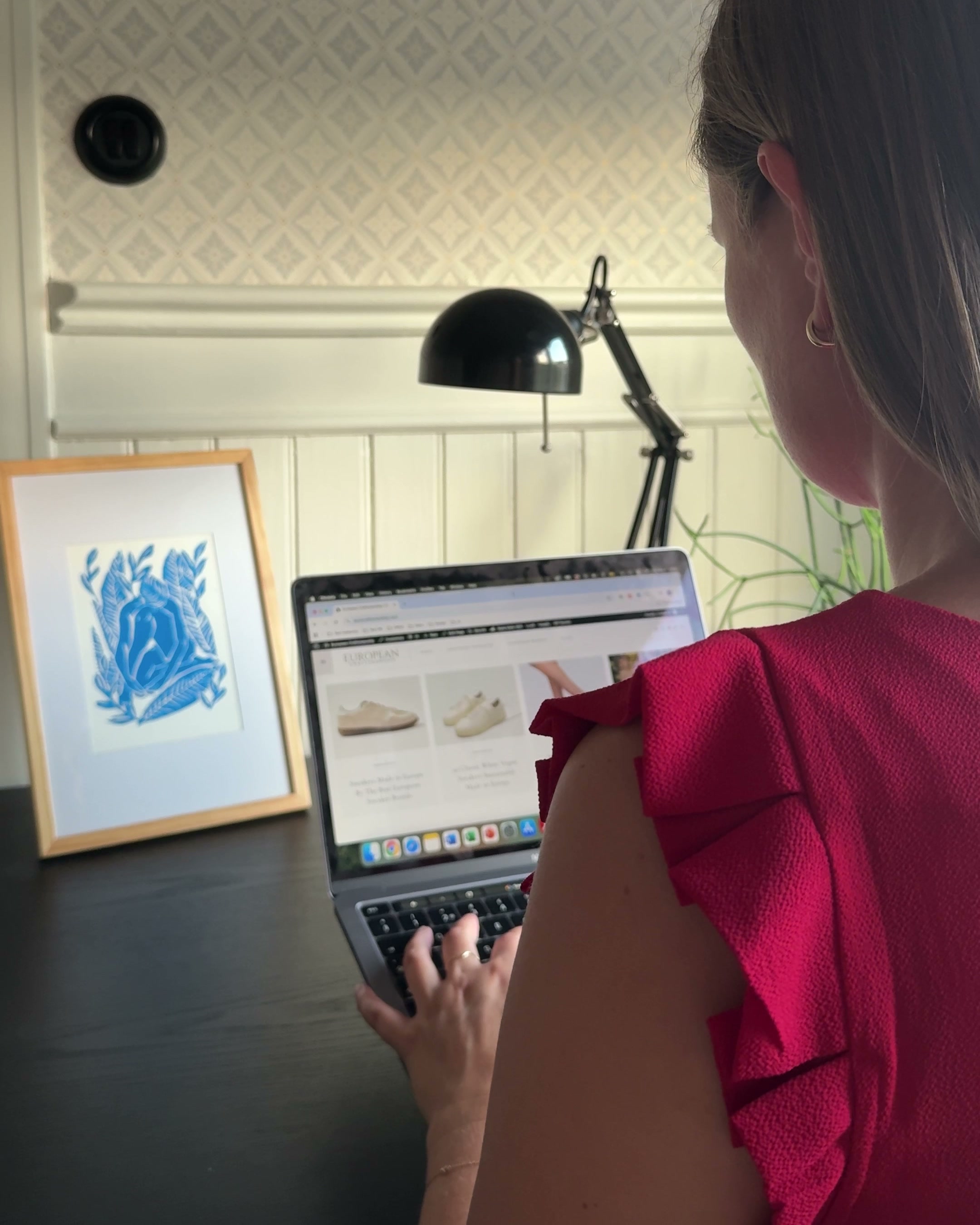
Building the platform has been a marathon. It has taken more energy and time than I can put a number on. But there are two things pay it back. The conversations with the people behind the brands, when it turns out we care about the same things. And the messages from readers who tell me they found what they had been looking for. I have given up deciding which of the two is the bigger reward.
I am building this for the person I was in 2018. Back then I searched for someone who had already done this work, a page, a directory, anyone. There are big players like Good On You, and I respect what they do, but a rating wasn’t what I needed. I needed to know where things are made and who made them. In the end I built the thing I was looking for. I still use it myself.
So if you want to shop more consciously, find things made closer to home, build a wardrobe that lasts, own things that don’t need replacing every year, or you are simply curious about how things are made, this is for you. I think of this as one big community, growing every day: new brands, new readers, new makers.
Two good places to start reading: Is locally made fashion better? and Which fabric should you buy?.


